Lymph Savior Official Website › Blog › Red clover
Red Clover in Lymph Savior: What Its Trials Measured and Who Should Ask First
Red clover is the most heavily trialled plant on this bottle and its trials are about menopausal hot flushes. That is not a criticism of the formula. It is a reason to know what its literature does and does not say before deciding whether this capsule suits you.
- Red clover is Trifolium pratense, a meadow legume and a source of isoflavones.
- Its randomised literature is about hot flushes, not about fluid.
- A 2021 meta-analysis of eight trials found about 1.73 fewer hot flushes a day against placebo, where the isoflavone dose reached 80 mg daily over twelve weeks.
- Isoflavones act weakly at oestrogen receptors, which matters for anyone with a hormone-sensitive condition.
- One published case report describes a coagulation disorder after misuse, which is a conversation for a prescriber rather than a reason for alarm.
What red clover is, and why it is here
Trifolium pratense is the pink meadow clover most people can picture, grown across Europe and North America as a forage crop and used in herbal practice for a long time before anybody isolated anything from it.
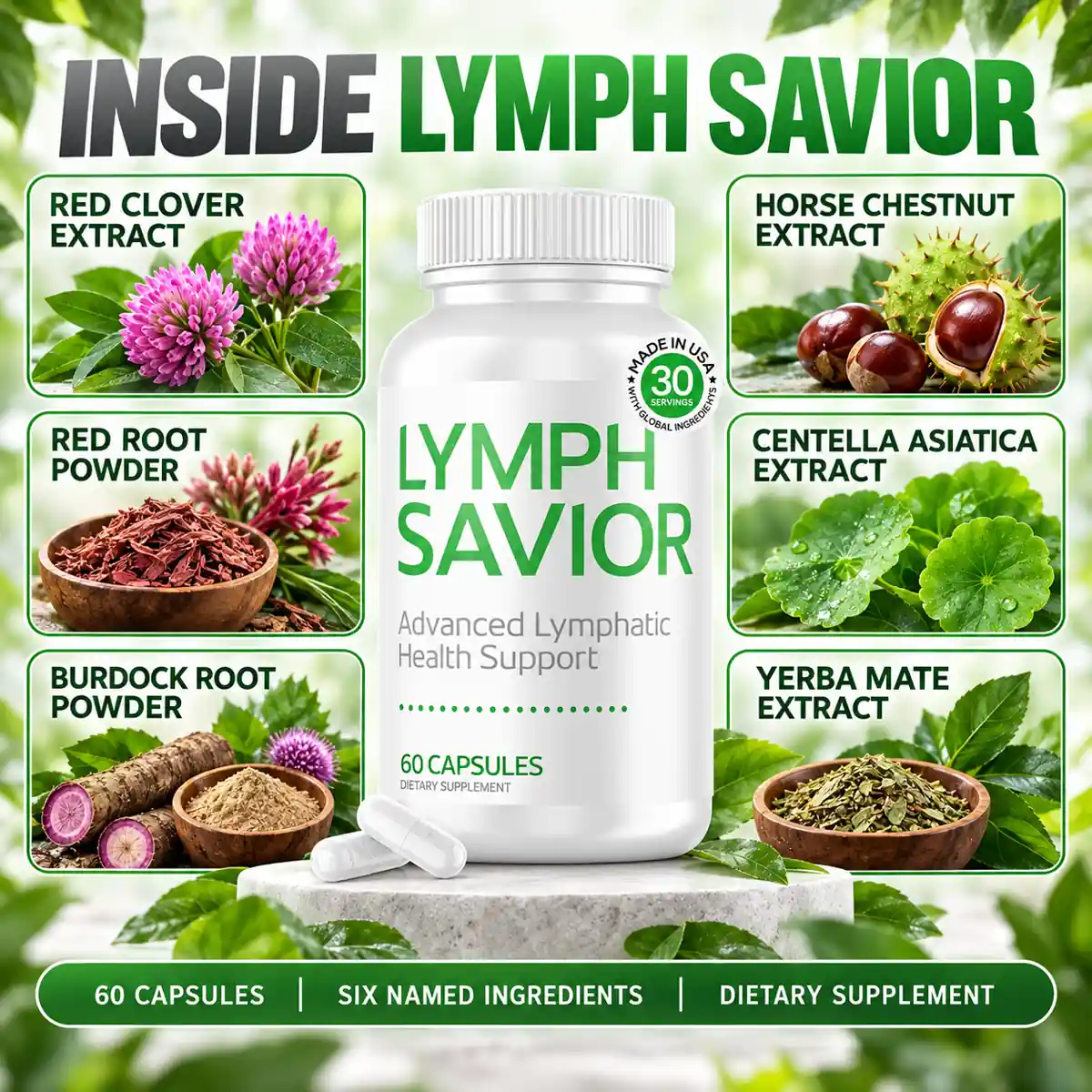
In the older herbal texts it is classed as an alterative, the same broad category as burdock and red root: a herb thought to restore normal function gradually rather than to act on a symptom. That is the traditional reason it appears on a formula like this one, and it puts it in the same box as two of its neighbours on the label.
Modern interest in it comes from somewhere else entirely. The flowers are rich in isoflavones, including biochanin A and formononetin, and those compounds are structurally similar enough to oestrogen to bind weakly at its receptors. That single chemical fact is the reason red clover has one of the largest randomised literatures of any botanical on any shelf.
What the trials actually measured
Hot flushes. Almost all of them, for decades.
A 2021 meta-analysis published in Nutrients pooled eight randomised trials, ten comparisons in total, and found a statistically significant reduction in the daily incidence of hot flushes among women taking red clover against placebo: a weighted mean difference of about 1.73 fewer a day. The authors noted substantial heterogeneity, and reported that the difference showed up in postmenopausal women having five or more flushes a day, where the follow-up ran twelve weeks and the isoflavone dose reached 80 mg a day.
The Cochrane review of phytoestrogens for vasomotor symptoms covers the broader class and is more cautious about the overall picture, which is the usual pattern when a Cochrane review and a single meta-analysis look at the same field.
What matters here is not whether red clover works for hot flushes. It is that this is what its evidence is about.
| What the red clover trials studied | What this bottle is sold for |
|---|---|
| Menopausal vasomotor symptoms | Everyday lymphatic support |
| Peri- and postmenopausal women | Healthy adults of eighteen and over |
| Standardised isoflavone doses, commonly reaching 80 mg a day | No amount printed, and no isoflavone percentage |
| Twelve weeks of follow-up | A reported three-to-six-week typical wait |
| A counted outcome: flushes per day | A sensation, which is why judging it is hard |
Five rows, and not one of them lines up. That is the whole argument of this article, stated as plainly as it can be.
The gap between the literature and the label
Two things follow from that table, and they point in opposite directions.
The first is that none of the red clover evidence transfers. A product cannot borrow a hot-flush result for a fluid claim, and nothing on this website does. Red clover is on this label for the same reason burdock is: a traditional classification, not a trial.
The second is more interesting. Red clover is one of the better-characterised botanicals in the whole supplement aisle. Its active compounds are identified, its dose-response has been examined, and it has been through enough randomised trials to be meta-analysed twice over. That is a plant somebody has actually studied, which cannot be said of red root.
So the fair reading is that red clover contributes a well-understood plant to a formula in an amount nobody has published, for a purpose its own literature does not address. All three halves of that sentence are true at once.
- Its evidence is real, large and about something else.
- Its traditional classification is what puts it on a lymphatic label.
- Its active compounds are known, which is more than most of this bottle can say.
- Its amount here is unpublished, like everything else on this label.
- Its safety considerations are the most specific on the bottle, which is the subject of the rest of this article.
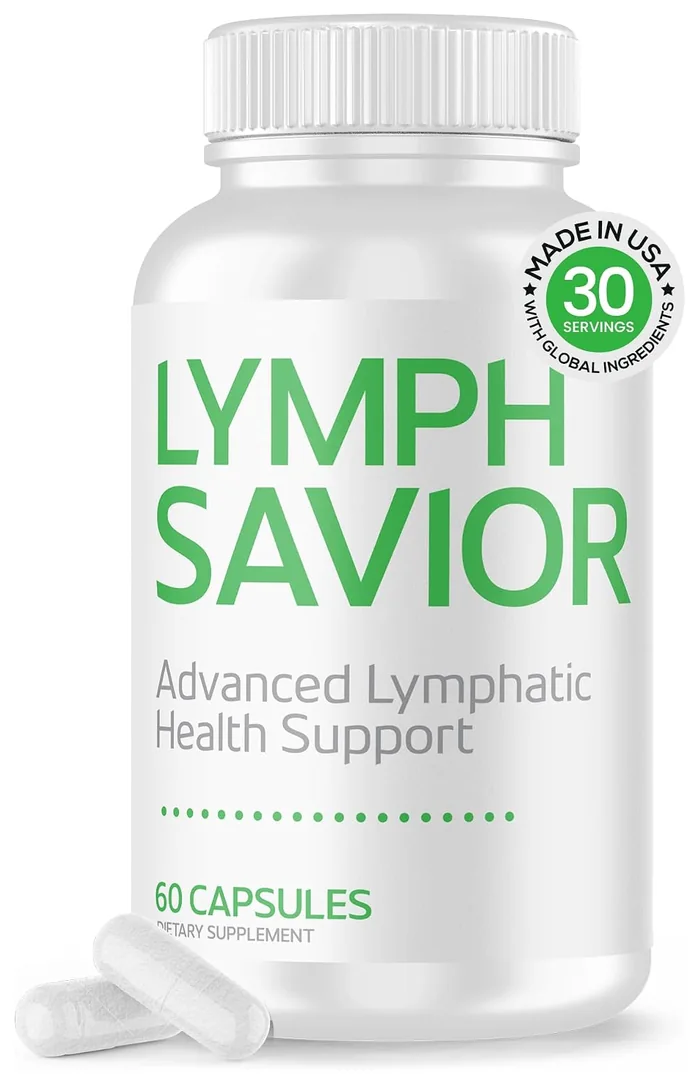
Read the Lymph Savior ingredients page for all six
Red clover is one of six, and the page sets out what each one is, what its own research used, and which two have randomised trials in a condition involving leg fluid.
One, three and six-bottle packs · price set at checkout · 60-day money-back guarantee
Order Lymph Savior From This OutletLot LYM-26/LY-5684 · two a day, 60 to a bottle · ships from the United States
Isoflavones, and who needs to think about them
Weak activity at oestrogen receptors is the reason red clover works on hot flushes at all, and it is the reason a few people should think before taking it.
A systematic review of soy, red clover and isoflavones in breast cancer exists precisely because the question is open rather than settled, and it is the right document for anyone whose situation makes this relevant to take to a conversation. The NCCIH page on red clover is a shorter plain-language starting point, and Memorial Sloan Kettering’s About Herbs entry is written for exactly this kind of question.
The practical list is short. Anyone with a hormone-sensitive condition, anyone taking tamoxifen, and anyone on an aromatase inhibitor should raise this label with whoever prescribes before the first capsule. That is one conversation, it is specific, and it is not the same thing as a general instruction to consult somebody about everything.
Pregnancy and breastfeeding are separate and simpler: the label already excludes both groups, and the isoflavones are one of the reasons it does.
The clotting question, and one case report
Red clover also contains coumestans, a different class of compound from the isoflavones, and coumarin-type chemistry is what raises the question about clotting.
A published case report describes a coagulation disorder following red clover misuse. One case report is not a population risk, and it would be dishonest to present it as one. It is also not nothing, and a page that left it out would be making the opposite mistake.
The proportionate response is narrow. A systematic review of warfarin interactions with food, herbs and supplements is the document to hand a prescriber, and anyone on an anticoagulant should have that conversation before starting rather than after.
For everybody else, this is context rather than a caution. It is here because the alternative is a reader finding it somewhere less careful and concluding that this site left it out.
This capsule contains red clover, which is a source of isoflavones and coumestans, in an amount the label does not state. That sentence is enough for somebody with the prescribing record in front of them to answer the question.
How to weigh it
Red clover is the clearest example on this bottle of a botanical whose reputation and whose evidence point in different directions, and holding both at once is the whole skill of reading a label like this.
It is not a reason to avoid the product. It is a reason to be precise about what the product is: a traditional formula, assembled on traditional classifications, containing two plants that happen to have modern trials in a neighbouring condition and one that has a large modern literature in an unrelated one.
A buyer who understands that sentence will not be surprised by anything this capsule does or does not do, which is the most a page like this can offer.
Why isoflavone content varies so much between products
One more thing about red clover is worth knowing, because it explains why two bottles naming the same plant can be very different objects.
The 2021 meta-analysis reported something specific about where its effect appeared: in comparisons where the formulation contained a higher proportion of biochanin A, one of the plant’s four main isoflavones. That is a statement about composition rather than about dose, and composition varies with the cultivar, the harvest, the plant part and the extraction method.
Which is why the better red clover products in the menopause aisle print two figures: the extract weight and the isoflavone percentage, sometimes with the individual isoflavones broken out. Without them, red clover extract describes a range of materials rather than a material.
- The four main isoflavones are biochanin A, formononetin, genistein and daidzein.
- Their proportions differ between preparations, and the meta-analysis found the effect where biochanin A was higher.
- This label prints neither an extract weight nor an isoflavone percentage.
- So nothing about the red clover in this capsule can be compared with the red clover in the trials, in either direction.
The same reasoning applies to every extract on this bottle and it is why the ingredients page on this site sets each botanical beside what its own research used rather than pretending a comparison is possible. Red clover is simply the clearest case, because it is the one where the literature is detailed enough to show exactly which number is missing.
The side effects page gathers the three considerations on this label in one place, and the suitability page lists the six groups who should leave this product alone.
References
- Kanadys W, Barańska A, Błaszczuk A, Polz-Dacewicz M, Drop B, Kanecki K, Malm M. Evaluation of Clinical Meaningfulness of Red Clover (Trifolium pratense L.) Extract to Relieve Hot Flushes and Menopausal Symptoms in Peri- and Post-Menopausal Women: A Systematic Review and Meta-Analysis of Randomized Controlled Trials, Nutrients. 2021;13(4):1258. https://pubmed.ncbi.nlm.nih.gov/33920485/
- Lethaby A, Marjoribanks J, Kronenberg F, Roberts H, Eden J, Brown J. Phytoestrogens for menopausal vasomotor symptoms. Cochrane Database of Systematic Reviews. 2013;12:CD001395. https://pubmed.ncbi.nlm.nih.gov/24323914/
- Fritz H, Seely D, Flower G, Skidmore B, Fernandes R, Vadeboncoeur S, Kennedy D, Cooley K, Wong R, Sagar S, Sabri E, Fergusson D. Soy, red clover, and isoflavones and breast cancer: a systematic review. PLoS One. 2013;8(11):e81968. https://pubmed.ncbi.nlm.nih.gov/24312387/
- Karimpour-Reihan S, Firuzei E, Khosravi M, Abbaszade M. Coagulation Disorder following Red Clover (Trifolium pratense) Misuse: a Case Report. Advanced Journal of Emergency Medicine. 2018;2(2):e20. https://pubmed.ncbi.nlm.nih.gov/31172083/
- Red Clover. National Center for Complementary and Integrative Health, National Institutes of Health. https://www.nccih.nih.gov/health/red-clover
- Tan CSS, Lee SWH. Warfarin and food, herbal or dietary supplement interactions: A systematic review. British Journal of Clinical Pharmacology. 2021;87(2):352-374. https://pubmed.ncbi.nlm.nih.gov/32478963/
- Red Clover. About Herbs, Memorial Sloan Kettering Cancer Center. https://www.mskcc.org/cancer-care/integrative-medicine/herbs/red-clover