Lymph Savior Official Website › Lymph Savior Ingredients
Lymph Savior IngredientsLymph Savior Ingredients: All Six Botanicals, And What Each One Is
Six botanicals, named on the artwork and printed here in the order the seller lists them: red clover, horse chestnut seed, red root, centella asiatica, burdock root and yerba mate.
No amount appears beside any of them, because no image supplied with this pack carries a Supplement Facts panel. Two of the six have randomised human trials behind them in a condition involving fluid in the legs; one has a large trial literature in an unrelated condition; two rest on tradition and laboratory work; and one carries caffeine.
Every source on this page was pulled from the NCBI record rather than remembered, and the amounts quoted are the amounts the trials used, not amounts this bottle contains.
The Lymph Savior formula, botanical by botanical
Six cards. Each one carries what the plant is, what its own research found, and the sources to check it against.
Red Clover Extract (leaves and flowers)
Trifolium pratenseNo amount on the artworkA meadow legume, and the most heavily trialled plant on this bottle in a use case that has nothing to do with the lymphatic system.
Eight randomised trials pooled in 2021 found red clover isoflavones cut hot flushes by about 1.73 a day against placebo, and the difference showed up where the dose reached 80 mg of isoflavones a day for twelve weeks. Menopausal flushing, not fluid.
Sources: a 2021 meta-analysis of red clover extract, the Cochrane review of phytoestrogens, the NCCIH page on red clover.
Horse Chestnut Extract (seed)
Aesculus hippocastanumNo amount on the artworkThe one botanical here with a Cochrane review behind it, and the reason this desk names it in the headline rather than a prettier plant.
Six placebo-controlled trials covering 502 people found a mean reduction in leg volume of 32.1 mL, and six of seven trials measuring leg pain found it fell. One trial suggested it did about as well as compression stockings. The reviewers still asked for larger definitive trials, and every trial they counted used horse chestnut on its own.
Sources: the Cochrane review of horse chestnut seed extract, a meta-analysis of horse chestnut seed extract trials, the NCCIH page on horse chestnut, Memorial Sloan Kettering's About Herbs entry for horse chestnut.
Red Root Powder (root)
Ceanothus americanusNo amount on the artworkA North American shrub with a long history in folk practice as a lymphatic herb and almost no modern record of any kind.
Its entire PubMed footprint is two papers. One is an 1868 note in the Atlanta Medical and Surgical Journal. The other is a 1997 phytochemistry paper from the University of Iowa, which isolated compounds from it and tested them against the bacteria that cause tooth decay. No randomised trial exists.
Sources: the 1868 note on Ceanothus americanus, the only modern laboratory paper on red root, the NCCIH herb index.
Centella asiatica Extract (aerial parts)
Centella asiaticaNo amount on the artworkGotu kola, and the second of the two plants here with controlled trials in a condition that involves fluid in the legs.
A 2013 systematic review pooled eight studies and found improvements in microcirculation measures, in the rate of ankle swelling and in the venoarteriolar response. Its authors flagged inadequate reporting and unclear risk of bias across most of the eight, which is an unusually candid warning to attach to one's own positive result.
Sources: a systematic review of Centella asiatica in venous insufficiency, the Cochrane review of phlebotonics, Memorial Sloan Kettering's About Herbs entry for gotu kola.
Burdock Powder (root)
Arctium lappaNo amount on the artworkA kitchen root in Japan and a traditional alterative in European and Chinese practice, on this bottle for the tradition rather than for a trial result.
A 2024 review of burdock root describes antioxidant polyphenols, flavonoids and fructo-oligosaccharides, and work in animals on liver protection, blood sugar and lipids. None of it is a human trial, and none of it is about lymphatic flow.
Sources: a 2024 review of burdock root, Memorial Sloan Kettering's About Herbs entry for burdock.
Yerba Mate Extract (leaves)
Ilex paraguayensisNo amount on the artworkA caffeinated South American leaf, and the ingredient that changes when in the day you should take this capsule.
Mate is a methylxanthine plant: caffeine, theobromine and theophylline are what a mate infusion delivers, and how much depends on the grind and on whether the water is hot or cold. The label prints no amount and does not call the extract decaffeinated, so the honest reading is that the capsule carries caffeine of an unstated size.
Sources: a review of Ilex paraguariensis research, a measurement of the caffeine extracted from mate, a meta-analysis of mate drinking and oesophageal cancer.
Which Lymph Savior botanicals have controlled trials, and in what
Six botanicals, two with randomised trials in the right neighbourhood, one with a large literature in the wrong one.
Two rows on that table carry randomised human evidence in a condition that involves fluid pooling in the legs, and both are worth reading closely.
The Cochrane review of horse chestnut seed extract pooled placebo-controlled trials and found a mean reduction in leg volume of 32.1 mL across six of them, covering 502 people, with six of seven trials that measured leg pain reporting a fall. One trial suggested the extract did about as well as compression stockings, which is a striking comparison. The reviewers still called for larger definitive trials before treating the question as settled.
The systematic review of centella asiatica pooled eight studies and reported improvements in transcutaneous oxygen and carbon dioxide measures, in the rate of ankle swelling and in the venoarteriolar response. Its own authors flagged inadequate reporting and unclear risk of bias across most of the eight, which is an unusually candid warning to attach to one's own positive finding, and it is the reason this page quotes it rather than paraphrasing it.
Red clover is the most heavily trialled plant on the bottle and the trials are about something else. A 2021 meta-analysis of eight randomised trials found isoflavones reduced hot flushes by about 1.73 a day against placebo, with the difference appearing where the dose reached 80 mg of isoflavones daily over twelve weeks. That is a real result in menopausal symptoms and it says nothing about fluid.
Why no Lymph Savior ingredient on this page carries a milligram figure
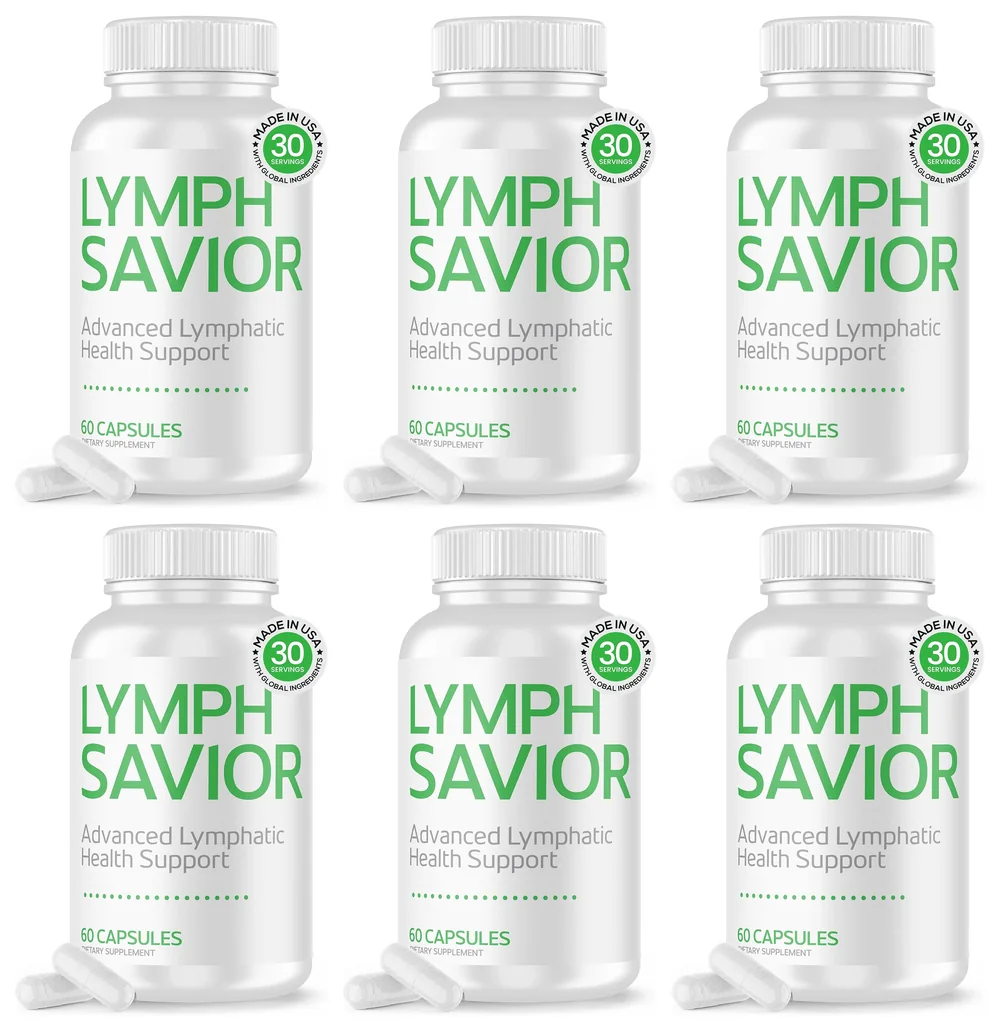
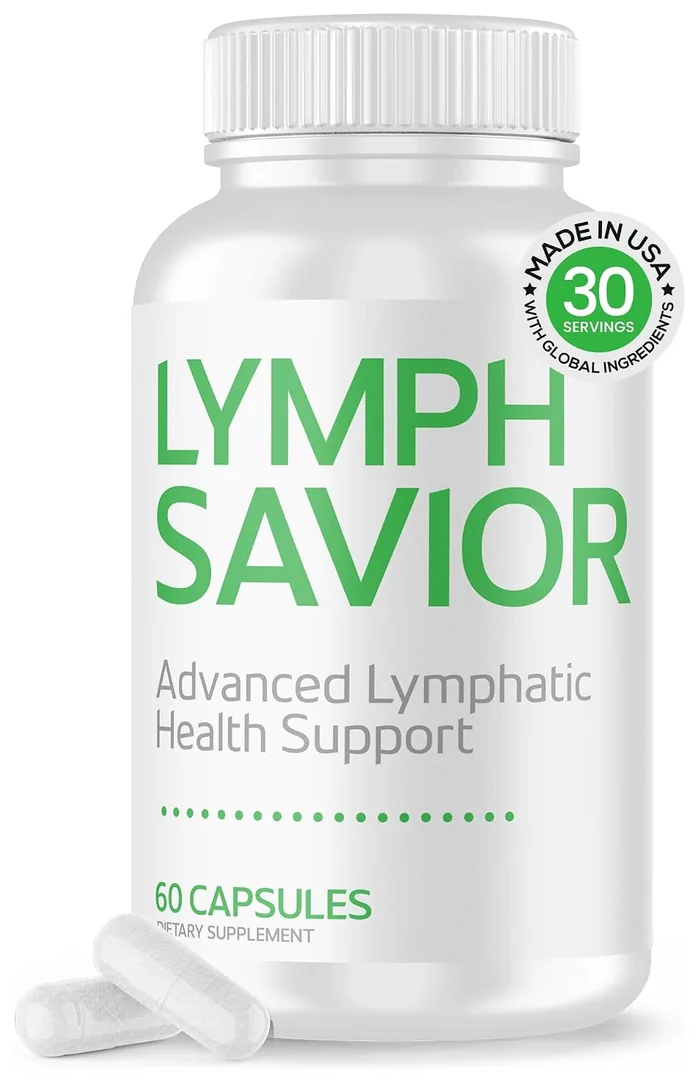
Because the bottle does not carry one. The front of the label prints the name, the strapline Advanced Lymphatic Health Support, the count of 60 capsules, the words DIETARY SUPPLEMENT and a roundel reading MADE IN USA WITH GLOBAL INGREDIENTS and 30 SERVINGS. No image in the pack shows a Supplement Facts panel, an ingredient list on the container, or an amount against anything.
The consequence runs further than a missing number. Botanical extracts are normally described by two figures: the weight of extract, and the percentage of the marker compound it is standardised to. Horse chestnut seed extract is usually standardised to escin; centella extract to its triterpenes; red clover to its isoflavones. Without either figure, the word extract is carrying the entire description.
So this page does what it can do instead. Every botanical is set beside what its own research used, with the population and the outcome attached, and the label's own column is left exactly as the seller left it. A reader who needs milligrams before buying should buy a product that publishes them, and that is a reasonable thing to want.
Sixty capsules, thirty servings, two capsules a serving. That is one month a bottle, it is checkable against the label in two seconds, and it is what the pack advice on this site is built from.
Where the two Lymph Savior ingredient graphics disagree
Four of six names match. This page prints both lists rather than choosing quietly.
| Named on INSIDE LYMPH SAVIOR | Named on WHAT IS INSIDE | Agree? |
|---|---|---|
| Red Clover Extract | Red Clover | Yes |
| Horse Chestnut Extract | Horse Chestnut | Yes |
| Burdock Root Powder | Burdock Root | Yes |
| Yerba Mate Extract | Mate | Yes |
| Red Root Powder | Ginger Root | No |
| Centella asiatica Extract | Echinacea | No |
Two graphics, both supplied in the same pack, four names in common and two swapped. The sales page names the first column, so the first column is what this website prints.
Ginger root and echinacea appear nowhere on this website as ingredients. Red root and centella asiatica do, because the sales page and the INSIDE graphic agree on them, and because a tile that contradicts both is the outlier rather than the record.
A buyer who needs certainty for the bottle in their own hand has one good move: call +1 (317) 715-7254 with the lot code from the base of the bottle and ask which artwork matches that production run. That is a two-minute call, and the batch page explains where to read the code.
What is not in Lymph Savior
- No printed amount for any botanical, which is the honest headline of this page and is covered above.
- No vitamin and no mineral. This is six plant extracts and powders, and nothing on the artwork suggests otherwise.
- No animal gelatin, according to the vegetarian mark the pack carries.
- No dairy and no gluten, according to the marks the pack carries. What each mark is actually a statement about is set out on the testing and quality page.
- No ginger and no echinacea, whatever the second graphic shows.
- No stated caffeine figure, which is not the same as no caffeine. Yerba mate carries it and the amount is unstated.
One absence on that list is a selling point and the rest are simply facts. The vegetarian shell is the selling point, and it is the sort of thing a reader switching from a gelatin capsule genuinely wants to know.
Who writes these Lymph Savior ingredient pages?
Every source cited on this page, and the method behind it.
- Kanadys W, Barańska A, Błaszczuk A, Polz-Dacewicz M, Drop B, Kanecki K, Malm M. Evaluation of Clinical Meaningfulness of Red Clover (Trifolium pratense L.) Extract to Relieve Hot Flushes and Menopausal Symptoms in Peri- and Post-Menopausal Women: A Systematic Review and Meta-Analysis of Randomized Controlled Trials. Nutrients. 2021;13(4):1258. https://pubmed.ncbi.nlm.nih.gov/33920485/
- Lethaby A, Marjoribanks J, Kronenberg F, Roberts H, Eden J, Brown J. Phytoestrogens for menopausal vasomotor symptoms. Cochrane Database of Systematic Reviews. 2013;12:CD001395. https://pubmed.ncbi.nlm.nih.gov/24323914/
- Fritz H, Seely D, Flower G, Skidmore B, Fernandes R, Vadeboncoeur S, Kennedy D, Cooley K, Wong R, Sagar S, Sabri E, Fergusson D. Soy, red clover, and isoflavones and breast cancer: a systematic review. PLoS One. 2013;8(11):e81968. https://pubmed.ncbi.nlm.nih.gov/24312387/
- Karimpour-Reihan S, Firuzei E, Khosravi M, Abbaszade M. Coagulation Disorder following Red Clover (Trifolium pratense) Misuse: a Case Report. Advanced Journal of Emergency Medicine. 2018;2(2):e20. https://pubmed.ncbi.nlm.nih.gov/31172083/
- Red Clover. National Center for Complementary and Integrative Health, National Institutes of Health. https://www.nccih.nih.gov/health/red-clover
- Red Clover. About Herbs, Memorial Sloan Kettering Cancer Center. https://www.mskcc.org/cancer-care/integrative-medicine/herbs/red-clover
- Pittler MH, Ernst E. Horse chestnut seed extract for chronic venous insufficiency. Cochrane Database of Systematic Reviews. 2012;11:CD003230. https://pubmed.ncbi.nlm.nih.gov/23152216/
- Siebert U, Brach M, Sroczynski G, Berla K. Efficacy, routine effectiveness, and safety of horsechestnut seed extract in the treatment of chronic venous insufficiency. A meta-analysis of randomized controlled trials and large observational studies. International Angiology. 2002;21(4):305-15. https://pubmed.ncbi.nlm.nih.gov/12518108/
- Horse Chestnut. National Center for Complementary and Integrative Health, National Institutes of Health. https://www.nccih.nih.gov/health/horse-chestnut
- Horse Chestnut. About Herbs, Memorial Sloan Kettering Cancer Center. https://www.mskcc.org/cancer-care/integrative-medicine/herbs/horse-chestnut
- Phares DL. Ceanothus Americanus: Red Root, New Jersey Tea. Atlanta Medical and Surgical Journal. 1868;9A(3):129-131. https://pubmed.ncbi.nlm.nih.gov/35824507/
- Li XC, Cai L, Wu CD. Antimicrobial compounds from Ceanothus americanus against oral pathogens. Phytochemistry. 1997;46(1):97-102. https://pubmed.ncbi.nlm.nih.gov/9276981/
- Chong NJ, Aziz Z. A Systematic Review of the Efficacy of Centella asiatica for Improvement of the Signs and Symptoms of Chronic Venous Insufficiency. Evidence-Based Complementary and Alternative Medicine. 2013;2013:627182. https://pubmed.ncbi.nlm.nih.gov/23533507/
- Martinez-Zapata MJ, Vernooij RW, Simancas-Racines D, Uriona Tuma SM, Stein AT, Moreno Carriles RMM, Vargas E, Bonfill Cosp X. Phlebotonics for venous insufficiency. Cochrane Database of Systematic Reviews. 2020;11:CD003229. https://pubmed.ncbi.nlm.nih.gov/33141449/
- Gotu Kola. About Herbs, Memorial Sloan Kettering Cancer Center. https://www.mskcc.org/cancer-care/integrative-medicine/herbs/gotu-kola
- Shyam M, Sabina EP. Harnessing the power of Arctium lappa root: a review of its pharmacological properties and therapeutic applications. Natural Products and Bioprospecting. 2024;14(1):49. https://pubmed.ncbi.nlm.nih.gov/39162715/
- Burdock. About Herbs, Memorial Sloan Kettering Cancer Center. https://www.mskcc.org/cancer-care/integrative-medicine/herbs/burdock
- Bracesco N, Sanchez AG, Contreras V, Menini T, Gugliucci A. Recent advances on Ilex paraguariensis research: minireview. Journal of Ethnopharmacology. 2011;136(3):378-84. https://pubmed.ncbi.nlm.nih.gov/20599603/
- Meinhart AD, Bizzotto CS, Ballus CA, Poloni Rybka AC, Sobrinho MR, Cerro-Quintana RS, Teixeira-Filho J, Godoy HT. Methylxanthines and phenolics content extracted during the consumption of mate (Ilex paraguariensis St. Hil) beverages. Journal of Agricultural and Food Chemistry. 2010;58(4):2188-93. https://pubmed.ncbi.nlm.nih.gov/20058928/
- Andrici J, Eslick GD. Maté consumption and the risk of esophageal squamous cell carcinoma: a meta-analysis. Diseases of the Esophagus. 2013;26(8):807-16. https://pubmed.ncbi.nlm.nih.gov/22891687/
- Herbs at a Glance. National Center for Complementary and Integrative Health, National Institutes of Health. https://www.nccih.nih.gov/health/herbsataglance
Order Lymph Savior once you have read the formula
Six botanicals, two of them with randomised trials in a condition involving leg fluid, and no printed amount for any of them. That is the honest description, and it is the one to decide on.
One, three and six-bottle packs · price set at checkout · 60-day money-back guarantee
Order Lymph Savior From This OutletLot LYM-26/LY-5684 · two a day, 60 to a bottle · ships from the United States