Lymph Savior Official Website › Blog › A caffeine plant this label does not contain
Centella Asiatica's Folk Name Sits One Word From A Caffeine Plant It Has Nothing To Do With
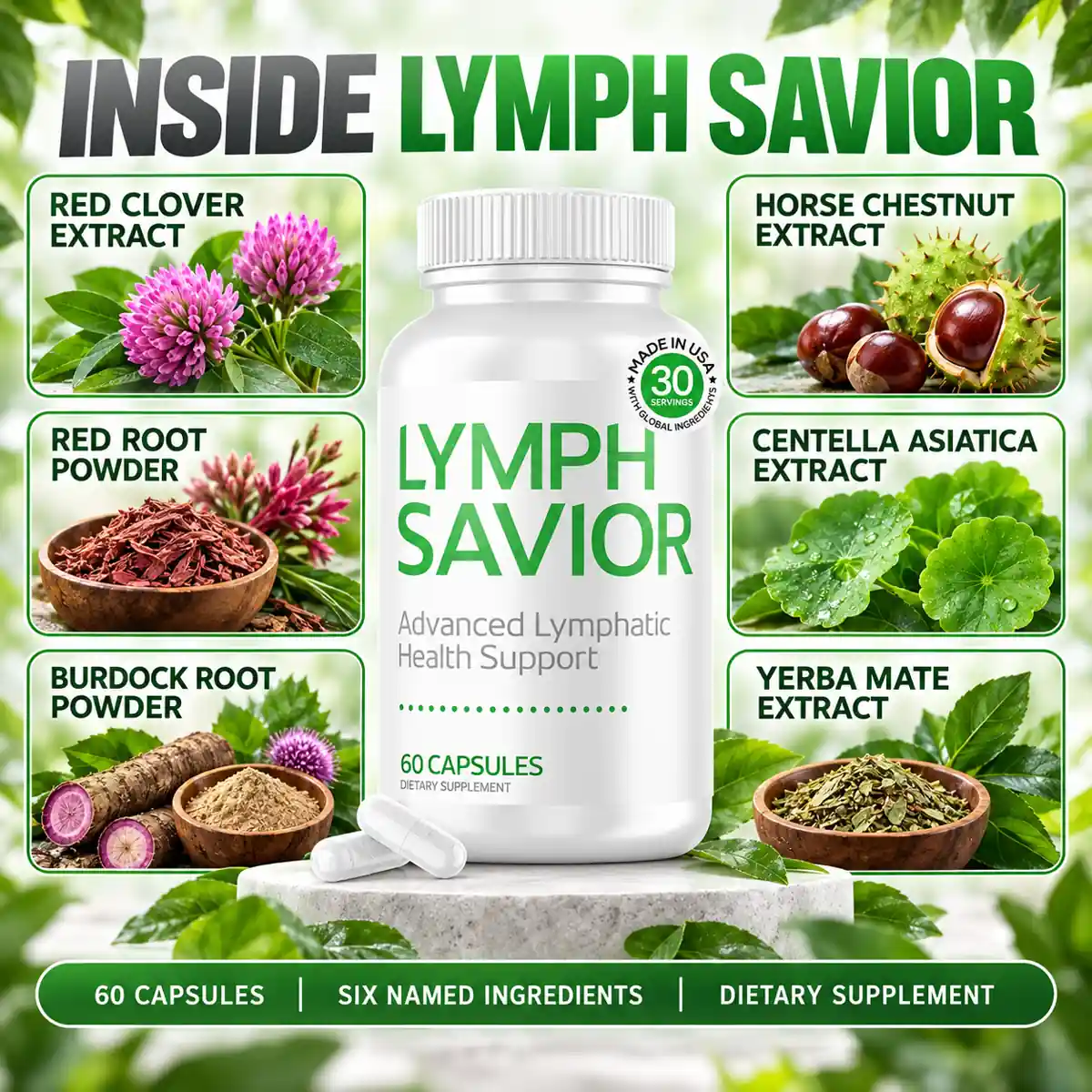
Centella Asiatica Extract is the fourth botanical this label names. Nowhere on the Lymph Savior artwork does the word gotu kola appear, but it is the name most people reach for first, and it is one word away from kola nut — a real, unrelated, genuinely caffeinated plant that has confused regulators as well as shoppers. This article explains the actual botany, so the one real caffeine source on this label, yerba mate, does not quietly become two.
- This label's fourth botanical is named Centella Asiatica Extract. Its common name, used nowhere on this artwork, is gotu kola.
- Gotu kola and kola nut are unrelated plants from different families, and the resemblance is in the English name only.
- Kola nut (Cola acuminata and Cola nitida) genuinely contains caffeine. Gotu kola does not.
- A respected integrative-medicine reference states plainly that gotu kola should not be confused with kola nut.
- This label's one real, documented caffeine source is yerba mate, named separately and covered on its own page.
A plant with two names, and only one of them is on this label
The Lymph Savior artwork names this ingredient Centella Asiatica Extract, aerial parts, and that is the only name printed anywhere on the pack. Outside this label, in gardening catalogues, herbal shops and most consumer writing, the same plant goes by a second name almost as often: gotu kola, sometimes written Gotu Kola or spelled with the Sinhalese-derived kola. A reader who searches for this ingredient under its own common name, rather than the Latin binomial this label actually uses, will land on gotu kola within the first few results, and that is where the trouble starts.
What kola nut actually is
Kola nut is the seed of trees in the genus Cola, principally Cola acuminata and Cola nitida, native to the tropical forests of West Africa. The seeds are chewed fresh in parts of West African culture as a stimulant and a social and ceremonial item, and an extract of the nut was historically one of the flavouring and stimulant components of early cola-flavoured soft drinks, which is where the word cola in that drink category originally came from. The U.S. Food and Drug Administration's own substances-added-to-food listing carries an entry for kola nut extract, Cola acuminata, as a recognised flavouring ingredient — a plain confirmation that this is a real, regulated, caffeine-bearing food substance, not a folk curiosity.
Why the two get confused, and who has made the mistake
Gotu kola and kola nut share nothing but a fragment of their English common names. One respected clinical reference, Memorial Sloan Kettering Cancer Center's About Herbs database, addresses the confusion directly and without hedging: gotu kola should not be confused with kolanut, the entry states, and goes on to note specifically that gotu kola does not contain caffeine and has not been shown to have stimulant properties. That a major cancer centre's integrative-medicine reference felt the need to state this explicitly, in those words, is itself evidence of how often the mix-up actually happens among patients and clinicians trying to look the plant up. Other herbal references go further and describe this as more than a casual mix-up among shoppers: by some accounts, government regulators themselves have at points mistaken gotu kola for kola nut when assessing it, treating a non-caffeinated plant as though it carried the stimulant properties of an entirely different one.
Different families, different chemistry, different continents of origin
The botanical case against the mix-up is complete. Centella asiatica belongs to the Apiaceae, the carrot and parsley family, and is native across tropical and subtropical Asia, where it grows as a low, creeping groundcover in damp soil. Cola acuminata and Cola nitida belong to the Malvaceae, the mallow family that also contains cacao and cotton, and are native to West African forest, growing as substantial trees rather than a creeping herb. The active compounds are equally distinct: centella's research centres on a group of triterpenes — asiaticoside, madecassoside and related compounds, the subject of a 2020 review in Frontiers in Pharmacology that surveys the plant's pharmacology without once describing it as a stimulant. Kola nut's defining compounds are methylxanthines: caffeine itself, plus smaller amounts of theobromine, the same class of stimulant compound responsible for coffee's effect and, as it happens, for part of yerba mate's effect elsewhere on this same label.
| Centella asiatica (gotu kola) | Kola nut (Cola acuminata / nitida) | |
|---|---|---|
| Plant family | Apiaceae (carrot family) | Malvaceae (mallow family) |
| Growth habit | Low creeping herb | Forest tree |
| Native range | Tropical and subtropical Asia | West Africa |
| Defining compounds | Triterpenes: asiaticoside, madecassoside | Methylxanthines: caffeine, theobromine |
| Contains caffeine? | No | Yes |
| On this label? | Yes, as Centella Asiatica Extract | No, under any name |
Six rows, and the only thing the two plants share is a fragment of an English common name that this label, notably, never even uses.
The one real caffeine source already on this label
None of this means the Lymph Savior capsule is caffeine-free. Yerba mate, the sixth botanical on the artwork, is a genuine methylxanthine plant: a 2007 comprehensive review in the Journal of Food Science by Heck and de Mejia documents caffeine, theobromine and theophylline as the active stimulant compounds a mate infusion delivers, and this website's own article on that ingredient covers in full the fact that the label prints no amount for it. The point of this article is narrower and sits beside that one rather than repeating it: a reader checking this capsule's stimulant content should count yerba mate, and only yerba mate, because centella asiatica — whatever its folk name suggests to someone skimming a search result — is not a second caffeine source hiding under a confusing name.
Read what yerba mate's caffeine actually involves
The real methylxanthine source on this label, the amount the artwork does not print, and what that means for when in the day to take this capsule.
One, three and six-bottle packs · price set at checkout · 60-day money-back guarantee
Order Lymph Savior From This OutletLot LYM-26/LY-5684 · two a day, 60 to a bottle · ships from the United States
Why this particular mix-up matters more on a six-botanical blend
On a single-ingredient gotu kola supplement, confusing the plant with kola nut mostly produces a wrong expectation: a buyer anticipating a stimulant effect that the actual plant does not deliver. On a six-botanical blend that already contains a genuine, unquantified caffeine source in yerba mate, the stakes of the mix-up shift. Someone trying to total the day's caffeine — coffee, tea, a soft drink, and this capsule — who mistakenly adds centella asiatica to that list as a second stimulant source is working from a wrong number in both directions: overcounting caffeine they are not actually getting from this plant, while the real figure they should be worried about is the one that is genuinely unstated, covered on this site's caffeine article. Getting the botany right here is not a pedantic exercise; it is the difference between tracking the one stimulant ingredient that is actually in the bottle and tracking the wrong one.
How to check any plant name against the thing it is being confused with
The method that resolves this particular mix-up generalises to almost any plant-name confusion a label might raise. Look past the English common name to the Latin binomial the label itself prints — this one is unambiguous, Centella asiatica, and it is the string worth searching rather than gotu kola alone. Check which plant family the binomial belongs to; two plants in different families, on different continents, are very unlikely to share meaningful chemistry no matter how similar their English names sound. And where a reputable clinical or regulatory source addresses the confusion directly, as Memorial Sloan Kettering's About Herbs reference does here, that direct statement is worth more than inferring an answer from the name alone.
It helps to know where the word kola in both names actually comes from, because the shared root is real even though the plants are not. Kola nut lent its name to the cola category of soft drinks in the nineteenth century, when extracts of the West African nut supplied both caffeine and flavour to the earliest recipes. Gotu kola picked up the kola half of its own common name later and separately, by a route herbal historians trace to a transliteration of a Sinhalese or Hindi term for the plant rather than to any botanical relationship with the African tree. Two unrelated naming histories converged on the same syllable, and nothing in either story implies a shared chemistry. Knowing that the overlap is etymological rather than botanical is often enough, on its own, to stop the mix-up before it starts.
The same check is worth running on the other five botanicals this label names, and the earlier article on this blog about this pack's two mismatched ingredient graphics is a reminder of why: a label is not a guarantee that every name on it, or every name a shopper might reach for while searching, points at the plant the seller actually intends. Centella asiatica is this label's clearest case of a common name doing more harm than good, because the common name it would normally carry is not even the one printed here — a reader has to go looking for trouble to find it, and this article exists so that when they do, the trouble resolves cleanly rather than turning into a second, imaginary caffeine source.
Gotu kola and kola nut share a syllable and nothing else: different family, different continent, different chemistry. This label's real caffeine lives in the yerba mate line, not here.
References
- Gotu Kola. About Herbs, Memorial Sloan Kettering Cancer Center. https://www.mskcc.org/cancer-care/integrative-medicine/herbs/gotu-kola
- Sun B, Wu L, Wu Y, Zhang C, Qin L, Hayashi M, Kudo M, Gao M, Liu T. Therapeutic Potential of Centella asiatica and Its Triterpenes: A Review. Frontiers in Pharmacology. 2020;11:568032. https://pubmed.ncbi.nlm.nih.gov/33013406/
- Kola nut extract, Cola acuminata Schott et Endl. Substances Added to Food, U.S. Food and Drug Administration. https://hfpappexternal.fda.gov/scripts/fdcc/index.cfm?set=FoodSubstances&id=KOLANUTEXTRACTCOLAACUMINATASCHOTTETENDL
- Heck CI, de Mejia EG. Yerba Mate Tea (Ilex paraguariensis): a comprehensive review on chemistry, health implications, and technological considerations. Journal of Food Science. 2007;72(9):R138-51. https://pubmed.ncbi.nlm.nih.gov/18034743/
- Herbs at a Glance. National Center for Complementary and Integrative Health, National Institutes of Health. https://www.nccih.nih.gov/health/herbsataglance